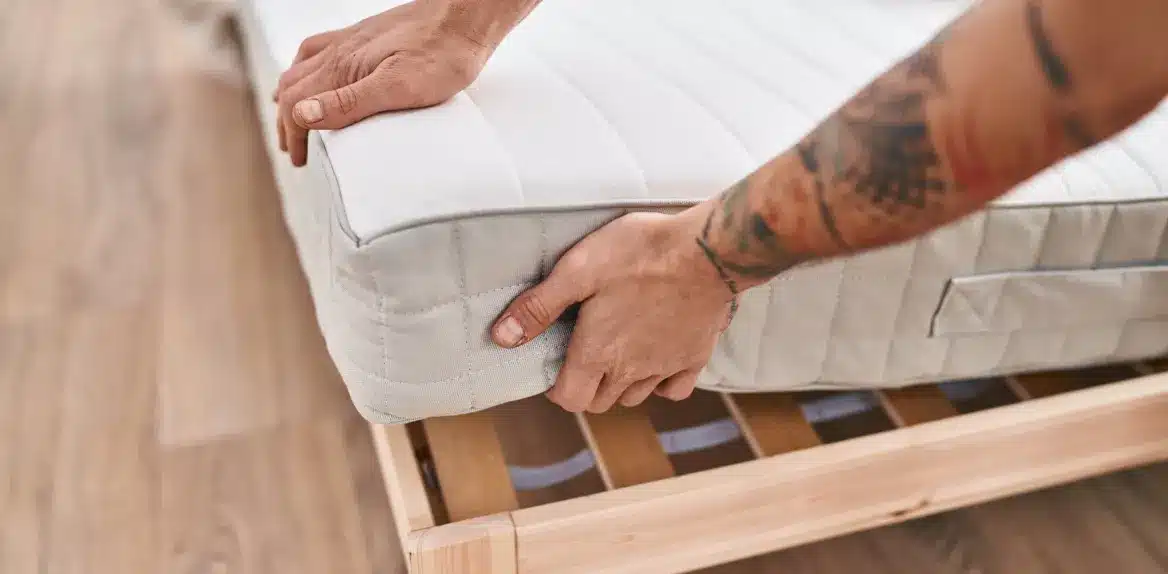
Simple Move That Requires the Right Technique
Mattresses are one of those items that look simple to move until you actually try it. They are big, awkward, and heavier than they look, and there is no good handhold anywhere. If you are moving without a full crew, knowing the right technique ahead of time can save you a pulled muscle, a torn mattress, or a very frustrating hour stuck in a stairwell. This guide walks through exactly how to move a mattress by yourself, step by step, along with a few situations where calling in help actually makes more sense.
Start With Measurements, Not Muscle
Before you lift anything, grab a tape measure. Check the width of your mattress against your doorways, hallway turns, and stairwell landings. Twin and full mattresses usually clear standard doorways without much trouble, but queen and king sizes often need to go through at an angle, and some staircases with tight turns may require tilting the mattress on its side the entire way down.
It helps to walk the exact path you plan to take, from bedroom to front door to vehicle, and clear anything that could get in the way. If you are moving locally and want a second opinion on logistics before moving day, a free moving quote can also flag potential access issues at your new place, like narrow stairwells or tight apartment hallways.
Gather the Right Supplies First
Trying to move a mattress with nothing but your hands is how backs get hurt and fabric gets torn. A few inexpensive supplies make a huge difference. A mattress bag or heavy plastic cover protects against dirt, tears, and moisture during transport, especially if you are loading it into an open truck bed or trailer. Moving straps with shoulder loops redistribute weight off your arms and onto your legs and shoulders, which matters a lot when you are working alone.
If you do not have straps, at minimum grab some rope or ratchet straps to secure the mattress once it is loaded, since a shifting mattress in transit can warp or slide right out of an open truck. Retailers like U-Haul sell mattress bags sized for twin through king, and having the right size on hand before you start makes the whole process faster. It is also worth grabbing a roll of packing tape to seal the bag once the mattress is inside, since an unsealed bag tends to slip open the moment you start lifting.
Some movers also like to have a furniture dolly on hand for shorter distances across flat ground, such as moving a mattress from a bedroom to a garage before loading. A dolly will not help much on stairs, but it can save your back on long, flat hallway stretches.
Protect the Mattress Before You Touch It
Slide the mattress into its protective bag while it is still flat on the bed frame or floor, since this is far easier than trying to wrestle a bag around it once it is standing on its side. Seal any open ends with tape to keep dust and debris out during the move. If you notice existing stains or wear, this is also a good moment to consider whether the mattress is worth moving at all. According to Sleep Foundation, most mattresses are built to last between seven and ten years, so if yours is older than that and already showing sag, it might be smarter to replace it after the move rather than pack it.
Lifting Technique Matters More Than Strength
Mattresses are not heavy in the way a dresser is heavy, but their size makes them awkward, and awkward loads are exactly what cause back injuries. Stand the mattress up on its long edge rather than trying to carry it flat, since flat carrying puts more strain on your lower back and blocks your view of where you are walking. Bend at the knees rather than the waist when you first tip it upright, and keep the weight as close to your body as possible throughout the carry.
According to the Occupational Safety and Health Administration, awkward postures and bending at the waist significantly increase the effective strain on your spine, even for loads that are not extremely heavy. Keep your elbows tucked in, avoid twisting your torso while carrying, and turn your whole body with your feet instead of rotating at the hips.
Navigating Doorways, Hallways, and Stairs
Once the mattress is upright and wrapped, guide it through doorways at a slight angle rather than straight on, since most mattresses are just a bit too wide to pass through squarely. For hallway turns, pivot the mattress gradually rather than forcing it around a corner in one motion.
Stairs are where most solo movers run into trouble. Going down, position yourself above the mattress and let gravity do some of the work while you control the pace, resting it briefly on each step if needed rather than trying to carry the full weight the entire flight. Going up is more physically demanding, so take breaks every few steps rather than pushing through in one continuous lift. If your new home involves a lot of stairs or a particularly tight stairwell, it may be worth reviewing our apartment moving checklist for other logistics you might not have considered yet.
Loading the Mattress Into a Vehicle
If you are using a pickup truck or open trailer, lay the mattress flat and secure it with ratchet straps run through the truck bed’s tie-down points. Avoid placing anything on top of it, since stacked weight can cause permanent dents or sagging, particularly in memory foam models. If you are using an SUV or a smaller vehicle, standing the mattress on its side against a wall of the cargo area, secured with straps, usually works better than trying to lay it flat.
Strapping a mattress to a car roof is technically possible but risky, especially at highway speeds or in bad weather, so it should really be a last resort. If you are moving long distance and want to avoid the guesswork of transporting large items yourself, our long distance moving services include equipment and experience specifically for large, awkward items like mattresses and box springs.
When It Makes Sense to Call in Help
Moving a mattress solo is doable for smaller sizes like twin and full, especially over short distances. Queen and king mattresses, particularly heavier hybrid or memory foam models, are a different story. These can weigh well over 100 pounds and become genuinely dangerous to maneuver alone through stairwells or tight turns.
If you are already coordinating a larger move, it often makes more sense to fold mattress transport into your overall plan rather than treating it as a separate solo project. Our guide on preparing your home for movers covers how to get bulky items like mattresses ready to go so your moving day runs smoothly, whether you handle the mattress yourself or have a team take care of it for you.
Final Thoughts
Moving a mattress by yourself is entirely possible with the right preparation. Measure your path, protect the mattress with a proper bag, use good lifting form, and take your time through doorways and stairs. For smaller mattresses and short moves, this approach works well. For larger, heavier mattresses or moves involving multiple flights of stairs, it is worth weighing the cost of a St George moving service against the real risk of injury or damage. Either way, a little planning goes a long way toward getting your mattress from one home to the next in one piece.